Share




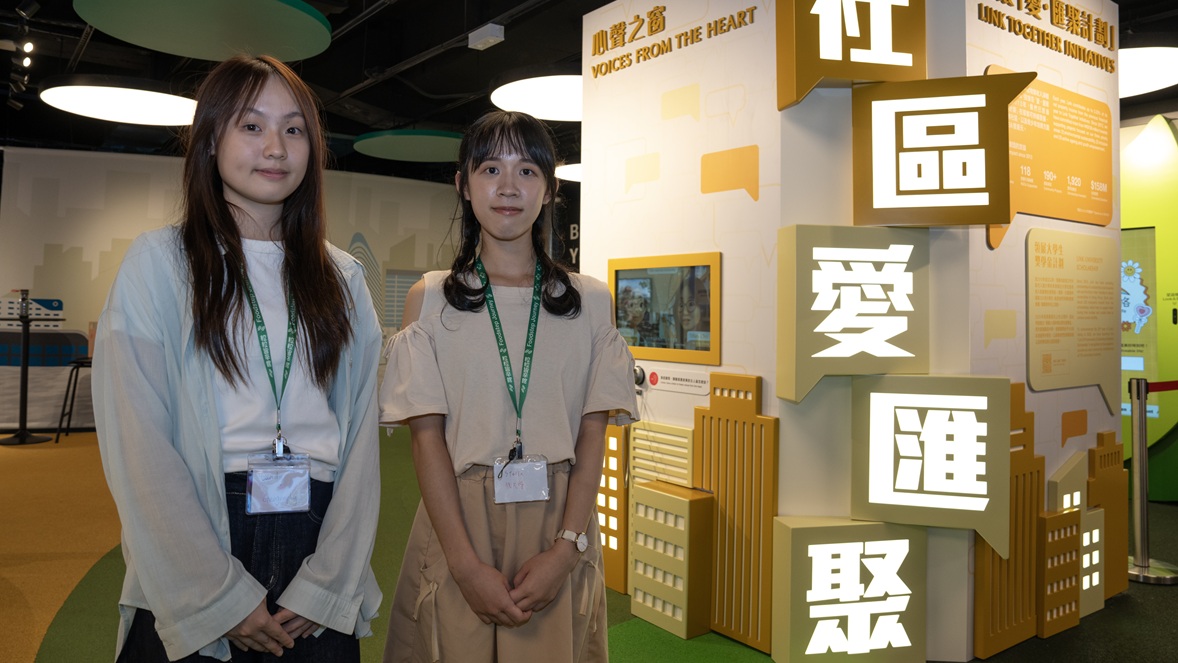
Respecting food and reducing waste are not merely behaviours. They are expressions of a deeper virtue – a commitment to valuing what nourishes us and ensuring it is never taken for granted. The “Sustaining Love” Youth Ambassador Programme, a collaboration between Link and Food Angel, brings this philosophy to life. Blending service learning with professional training, the programme empowers young people to move beyond the lecture hall by equipping them with the tools to work alongside their communities and champion food waste reduction and community care through purposeful, hands-on engagement.
As the programme’s second phase has reached its mid-term stage, two Link University Scholarship recipients – Candy Wong from Hong Kong Baptist University and Stella Poon from The Hong Kong Polytechnic University – reflect on how they have turned theory into practice. In doing so, they have not only addressed the pressing challenge of food waste but also experienced personal growth, a renewed sense of responsibility and a deeper understanding of their own role in building a more sustainable future.
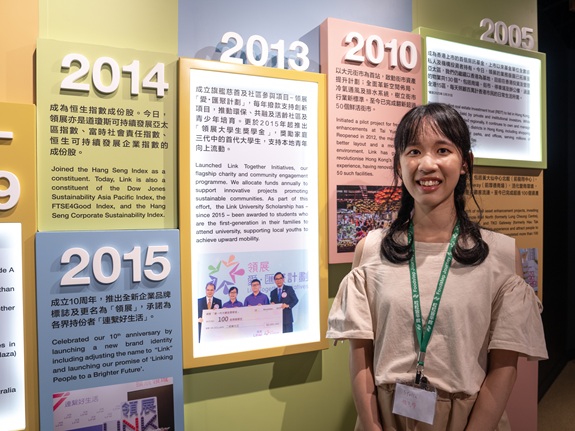
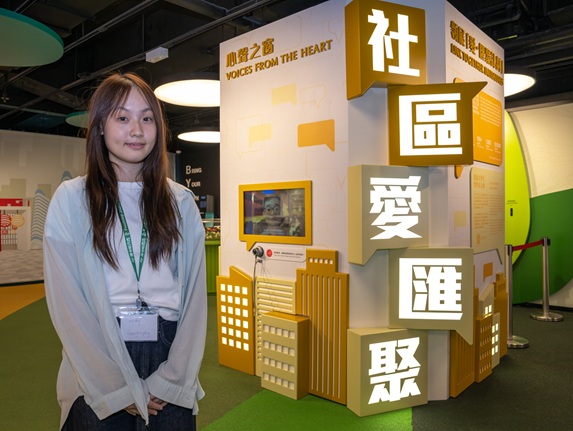
Candy and Stella are exceptional students with distinct ambitions. Candy aspires to become an educator, while Stella is passionate about understanding the cultural and intrinsic value of food. Yet, through the ambassador programme, their paths converged. What began as academic achievement evolved into a shared mission.
For Candy, being a Link University Scholarship recipient is more than an honour; it has become motivation. “Having my efforts recognised strengthened my resolve to give back to society,” she reflects. Stella perceives the award as both validation and responsibility: “Being acknowledged means I have an even greater duty to serve the community through action.”
In this way, the scholarship has taken on a new dimension for both students. It is no longer simply a means of supporting their studies; it is an invitation to step beyond the classroom and to apply their skills, compassion and creativity to make a tangible difference in the lives of others.

When asked about her most rewarding experience, Candy immediately recalls leading guided tours for children. “I once asked a group of young participants: ‘What should you do with orange peels after eating?’ They answered without hesitation: ‘Put them in the food waste bin!’” The delight in her voice is unmistakable. “These ideas are already taking root in their minds.”
What impressed her most, however, was seeing the children’s ability to think beyond the obvious. She remembers one thoughtful child remarking, “I won’t waste food if I buy less in the first place.” Such moments reaffirmed Candy’s belief in education’s power to genuinely shape how the next generation values food, not just in theory, but in everyday choices.
For Stella, the most profound moment came not in a classroom, but in Food Angel’s central kitchen. She admits that, at first, Food Angel’s impressive statistics – tens of thousands of meal boxes – felt distant, even abstract. “It sounded remarkable, but it was still just a number.”
Everything changed when she joined the production line, working “like a factory worker, continuously sealing meal boxes”. After two hours, as trolley after trolley filled with neatly stacked meals, her perspective shifted. “In that moment, the numbers became human,” she reflects. “Behind every meal box lies an act of care, a gesture of compassion, a real person being nourished.”

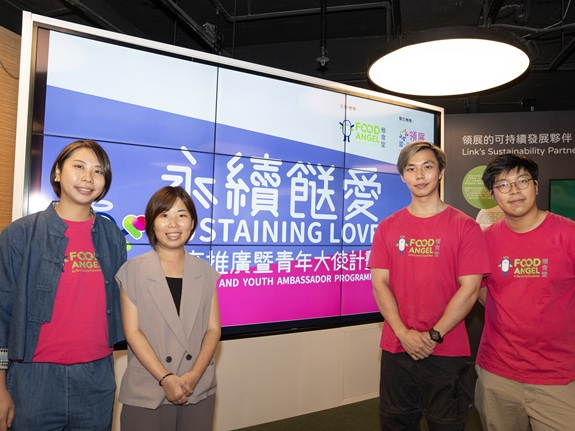
The second phase of the “Sustaining Love” Youth Ambassador Programme has reached its mid-term stage. Reflecting on its impact, Katrina Cheng, Manager - Education at Food Angel, explains: “This programme bridges academia, social welfare, business and the public, enabling youth ambassadors to experience the full cycle of food sustainability – from rescuing surplus food at markets to providing volunteer services and participating in frontline meal distribution.”
For Candy, Stella and their fellow ambassadors, this holistic approach was transformative. It offered not only opportunities to serve but also space for deep learning, self-reflection and a clearer understanding of how individual actions connect with broader societal change.
Such achievements have been made possible through a long-term, carefully nurtured partnership. Since 2016, Link and Food Angel have collaborated on the “We Link We Share” programme, steadily building public awareness and participation in food rescue and food donation initiatives. Over time, this partnership has evolved – from launching a pop-up store in 2021 to establishing Hong Kong’s first “Rice Boy Station”, an innovative initiative combining sustainable consumption, food donation and community support at the Link Sustainability Lab.
Through creativity, strategic collaboration and unwavering commitment, Link continues to weave food waste reduction and sustainable living into everyday community life, demonstrating how shared purpose and partnership can drive meaningful, lasting social transformation.
