Board Committees: Responsibilities and ESG Integration
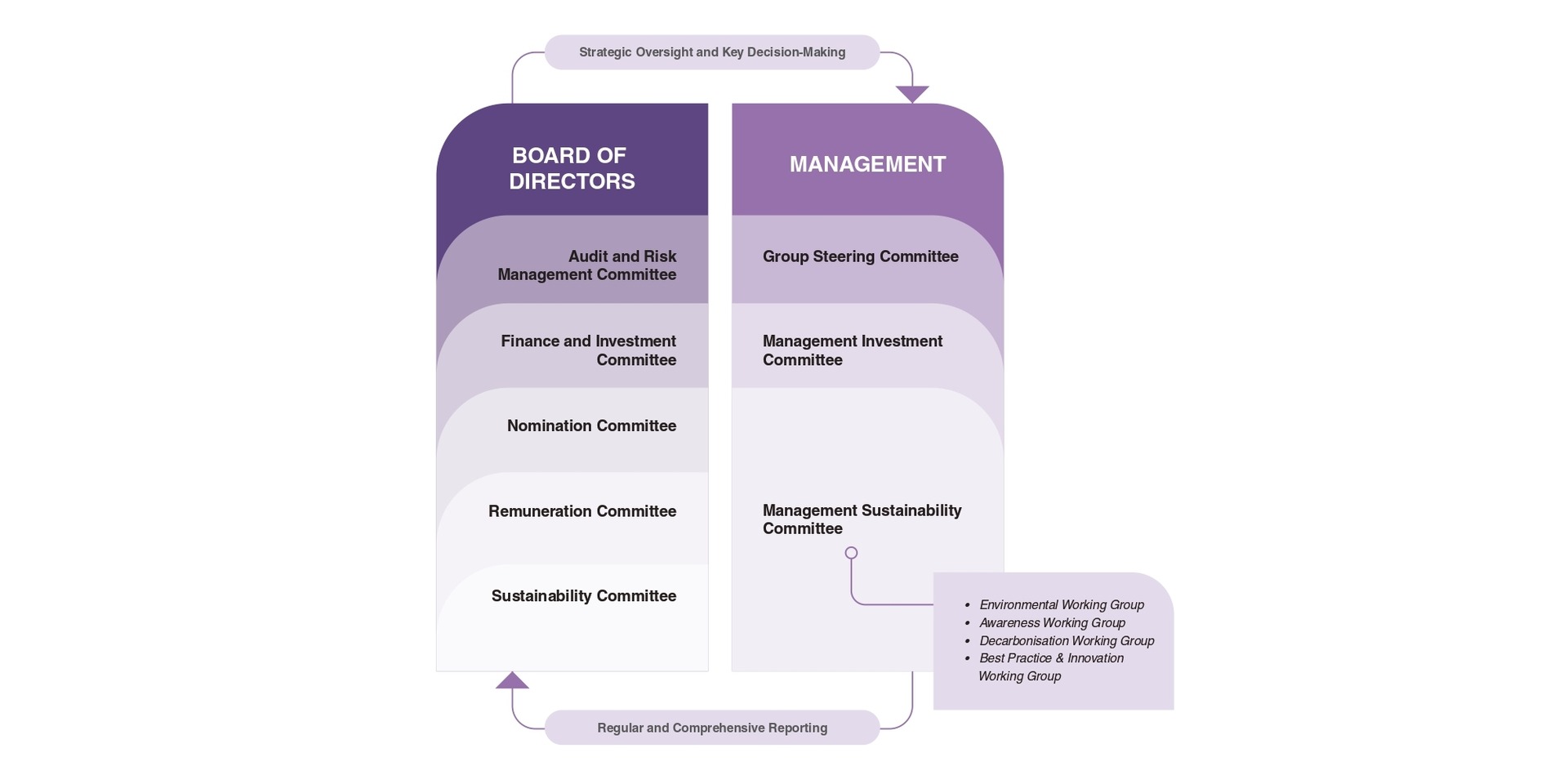
Oversees risk management, internal controls, financial statements and reporting assurance. Reviews ESG-related risks - including health and safety - as part of the enterprise risk register.
Oversees capital allocation and investment planning. Co-owns the Responsible Investment Policy, integrating climate risk assessment and decarbonisation alignment into due diligence and investment proposals.
Ensures Board composition and skills align with long-term strategic needs, including diversity and the ESG fluency required for effective oversight of sustainability-linked capabilities.
Aligns remuneration frameworks with strategic goals and shareholder expectations. This includes oversight of sustainability KPIs in management performance reviews and long-term incentive structures, particularly concerning decarbonisation targets.
Guides sustainability strategy and target-setting, reviewing progress on decarbonisation, climate resilience and stakeholder alignment. Oversees ESG data controls, third-party assurance and the full suite of sustainability policies. Priorities set by the Sustainability Committee cascade into the enterprise risk register, investment decisions and reward frameworks.
From Oversight to Execution
Link’s executive decision-making body, responsible for ensuring alignment across the organisation’s key initiatives and driving business priorities forward.
Reviews investment proposals with assessment of material ESG and climate risks – including flood and heat stress exposure, energy and carbon intensity – as part of the approval process. ESG considerations are integrated into financial, reputational and long-term viability assessments.
Supports long-horizon risk reviews, including scenario analysis and location-specific exposure to physical or transition risks. While not focused exclusively on ESG, sustainability risks are a formal consideration in the committee’s scope.
This cross-functional committee oversees the implementation of sustainability initiatives, progress against targets, cross-regional alignment and escalation of sustainability-related challenges. It ensures sustainability remains embedded in operational decision-making across the organisation.