Share




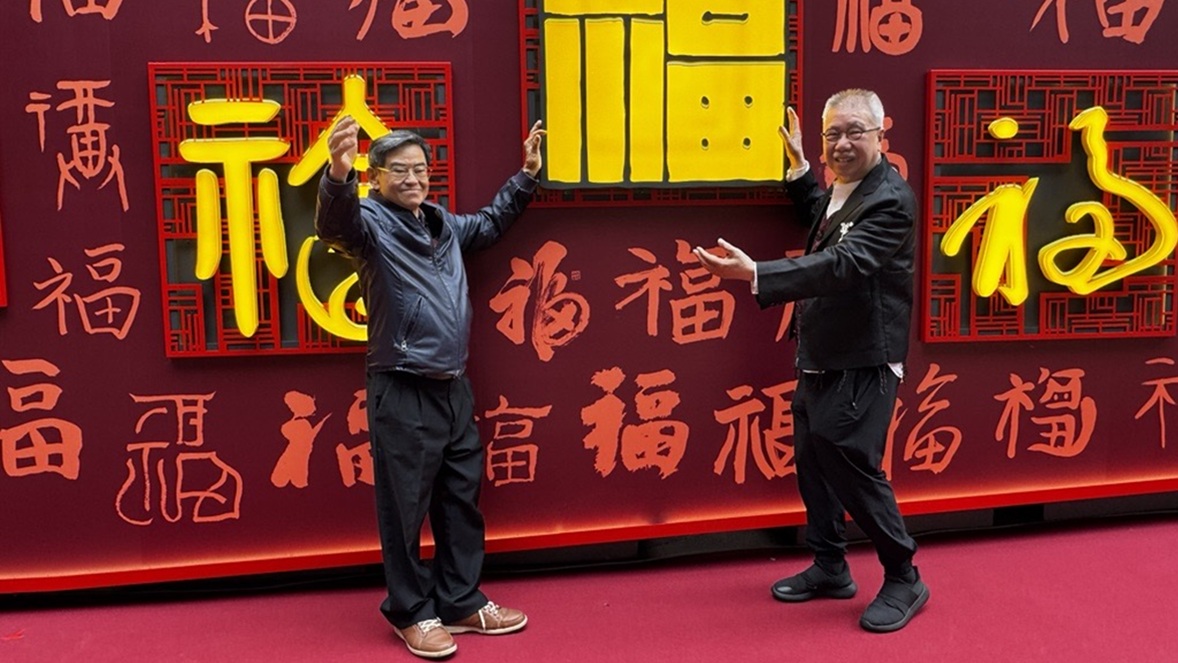
Stepping onto Fortune Lane, the thoroughfare connecting Link’s Temple Mall to Wong Tai Sin Temple and the MTR station, visitors are now met by an 18-metre-wide, 3.8-metre-tall Fortune Wall. Featuring 108 distinct calligraphic renditions of the Chinese character for “fortune”, created by contributors across sectors and generations, this installation has become a new cultural landmark – shaped by community collaboration, framed by the distant silhouette of Lion Rock, imbued with deep meaning.
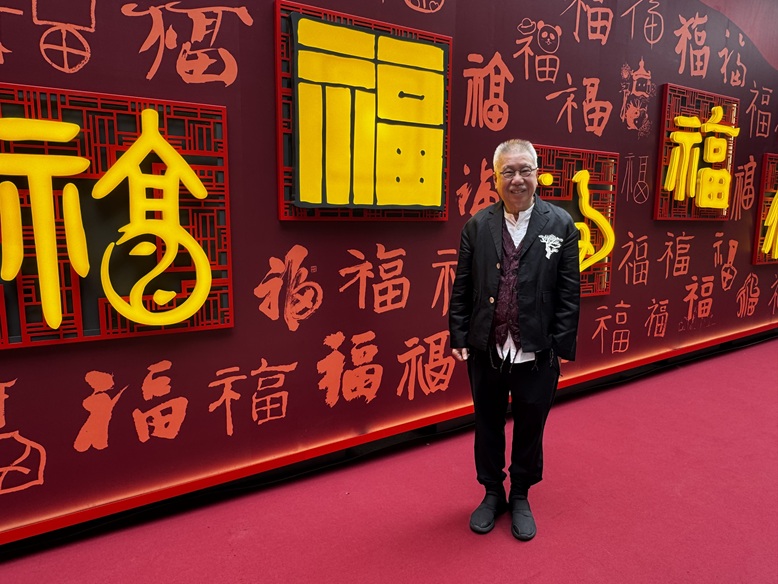
Here, the brushwork of two men who have known each other for more than six decades sits side by side: legendary lyricist Cheng Kok-kong and internationally acclaimed designer Kan Tai-keung. Their works speak both to a deep and enduring friendship and to the cultural spirit long nurtured by Hong Kong.
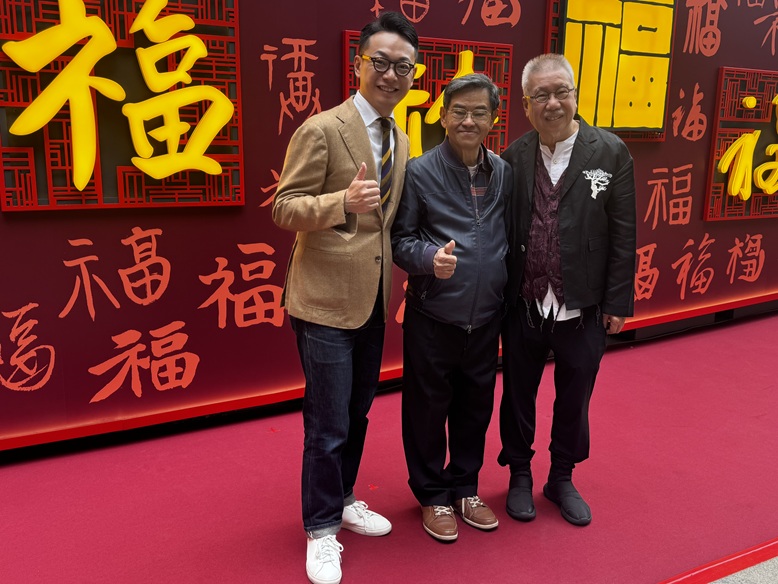
“I’m overjoyed that the opening ceremony of the Fortune Wall has brought me together with Kan Tai-keung and my calligraphy teacher, Ou Da-wei. Even a photograph with the two of them is a true blessing for me,” says Cheng, who is in his eighties. Recalling a bond stretching back more than sixty years, he explains: “Kan and I went to evening school together, studying design under the painter Wucius Wong. We’ve stayed in touch ever since. We would visit each other’s exhibitions and attend events together.”
Kan began his working life as a tailor before pivoting to design. To him, Hong Kong is a place of genuine fortune: “There were so many opportunities to study in the evenings back then. You could build a career even without formal qualifications. The economy was taking off, and local popular culture was just finding its footing. All of that gave those of us who were young at the time so much room to grow.” Cheng echoes the sentiment: “We didn’t ‘win at the starting line’. It was this city and that era that made us who we are.”
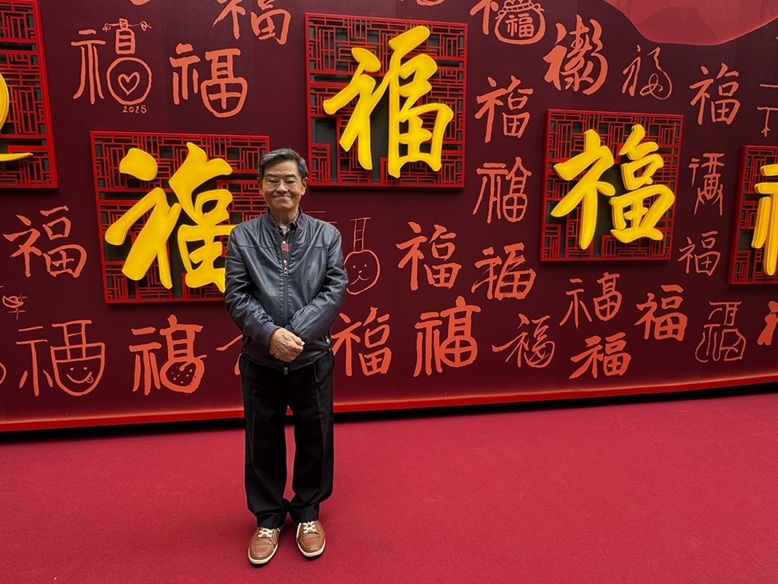
When Link invited Kan and Cheng to contribute to the Fortune Wall, each responded in his own way. Cheng confesses that he initially considered submitting a piece of calligraphy that his teacher had given him during Chinese New Year. “But I felt I couldn’t take a shortcut,” he says. “So I dug out my brushes – unused for over a decade, the ink long since dried. I practised first on newspaper with water before finally putting the brush onto red paper to create what you see today.” The experience of picking up his brush again led him to a quiet realisation: “Everything has its process. What matters is how wholeheartedly you approach it.” Having decided last year to lay down his pen for good, he regards this contribution as “a most fitting conclusion” to his prolific creative life.
When Link invited Kan and Cheng to contribute to the Fortune Wall, each responded in his own way. Cheng confesses that he initially considered submitting a piece of calligraphy that his teacher had given him during Chinese New Year. “But I felt I couldn’t take a shortcut,” he says. “So I dug out my brushes – unused for over a decade, the ink long since dried. I practised first on newspaper with water before finally putting the brush onto red paper to create what you see today.” The experience of picking up his brush again led him to a quiet realisation: “Everything has its process. What matters is how wholeheartedly you approach it.” Having decided last year to lay down his pen for good, he regards this contribution as “a most fitting conclusion” to his prolific creative life.
For both men, the Fortune Wall carries significance far beyond its role as an art installation. Cheng is particularly moved by the lighting: “Light and warmth are what we need most. Whether or not you can read the characters, you feel their warmth and strength. I also hope everyone who passes by will take home the message of peace that the fortune character embodies. A peaceful home makes for a stable society. Visitors can also carry that blessing out to the world.”
Kan explores the universal value of “fortune” through a cultural lens: “In Chinese tradition, we speak of fortune, prosperity and longevity. Longevity belongs to the old, and status and wealth are attained only by some. But fortune belongs to everyone. Men or women, young or old, rich or poor – fortune is what we all aspire to.” Pointing at the 108 characters on the wall, he continues: “No two are the same. That reflects something essential about Chinese calligraphy – the breath and feeling of a piece. It is always alive, never mechanical. Even a visitor who cannot read Chinese will be drawn to the variety of forms, sensing Hong Kong’s creative spirit.” He likens the 108 contributors to “Hong Kong’s 108 heroes of culture”, a nod to the figures in the famed novel Water Margin, embodying diversity and collective endeavour.
The Fortune Wall has emerged from Link’s placemaking work. Temple Mall has long championed preservation of local and traditional culture, and the Fortune Wall brings that commitment to life, gathering blessings from near and far into a space fusing community and culture.
Cheng sees this engagement as image-building with substance: “Cultural activities like these show that Link is not just in the business of business. There is a cultural dimension.” Touching on the quiet importance of beauty in everyday life, he adds: “Families used to put plastic flowers in their homes. They could have chosen art instead. Beautifying life – making it less monotonous – naturally makes people happier.”
Kan identifies the project’s core value directly: “Using culture to elevate a brand matters. The quality of people’s lives rises through culture too. This project brings culture into daily life.”
What was once a busy, single-purpose passageway is now transformed into a cultural landmark where art, calligraphy and heritage invite passersby to linger. Individual brushstrokes have become a shared creative act; a sixty-year bond between two old friends has expanded into blessings for an entire community. The Fortune Wall holds all of Hong Kong’s warmth, creativity and spirit. True to the seeking spirit of Wong Tai Sin, this act of placemaking offers blessings to all who pass through and guides the community towards a richer, more joyful life.