Share




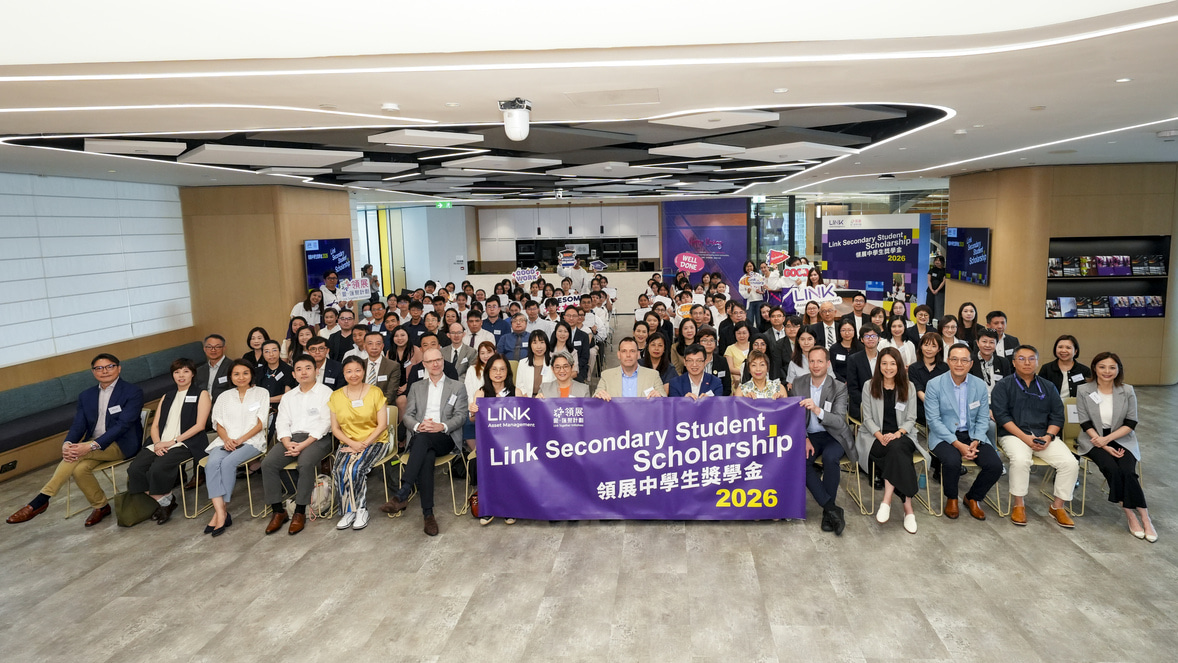
Young people have fresh ideas for one of Hong Kong’s biggest challenges: an ageing population. Now in its second year, the Link Secondary Student Scholarship does more than recognise academic high-flyers. It encourages students to step out of the classroom and deep into the community.
Through workshops organised by Link, shortlisted students gained skills in design thinking and pitching, learnt about the needs of Hong Kong’s “young-old” and conducted fieldwork at Link’s shopping malls and fresh markets. They then transformed their observations into practical community service proposals and presented their ideas at the Interview Day and Awards Ceremony.
In the end, five students stood out from a field of talented peers to become this year’s top five awardees: Au Pui-sze of St. Paul’s Co-educational College, Lau Cheuk-lam of Buddhist Tai Hung College, Ng Sum-yin of Heep Yunn School, Shum Hok-lai of Munsang College and Charissa Tsui of St. Paul’s Convent School.
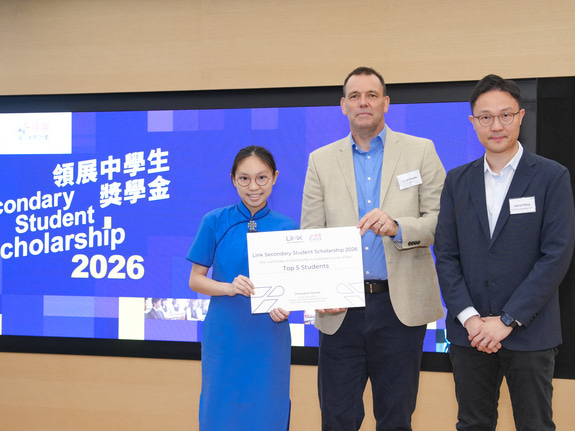
All five students admitted that at first they knew little about the young-old, defined as people aged 55 to 65. After interviewing shoppers at Sau Mau Ping Shopping Centre, however, Au Pui-sze came to see how much retirement can reshape people’s lives, from their friendships and relationships to their careers and daily activities. “Don’t be quick to label people,” she says. “Only by engaging with them can we understand what they need and how to best support them.” Her proposal sought to transform the shopping mall into a platform where seniors and young people can brainstorm business ideas together and trial a pop-up market. The idea recognises that the young-old still have much to contribute to society.. Her proposal won unanimous approval from all three judges.
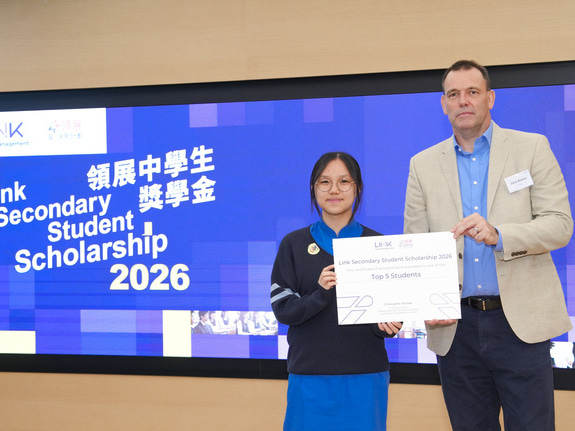
Ng Sum-yin was equally inspired. With little prior exposure to community work, she made a special trip to Fu Heng Shopping Centre in Tai Po to interview 30 young-old people. Through these conversations, she came to realise how much they long for social contact and a sense of being needed. “A lot of things are not as simple as they appear,” she says. “You may really have to dig to find the right questions to ask and get their answers.” Approaching the challenge from a student’s perspective, she proposed a two-way, cross-generational initiative: the young-old prepare lunchboxes for young people, while the young return the favour by teaching digital skills and promoting the lunchboxes on social media. By supporting one another, both generations can build stronger connection while enriching the lives of the young-old.
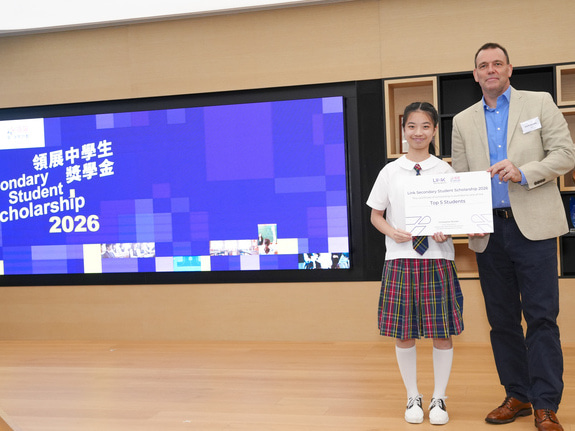
Hong Kong’s malls and fresh markets do more than meet daily needs; they are places where communities come together. After visiting Choi Ming Market, Charissa Tsui proposed setting up a smart mini health kiosk near the entrance, with a body-fat scale and an AI agent to suggest a healthy shopping list. She explained to the judges that her “food as medicine” idea grew out of a real concern raised by her grandmother: “The biggest headache when buying groceries is not knowing which healthy ingredients to choose.”
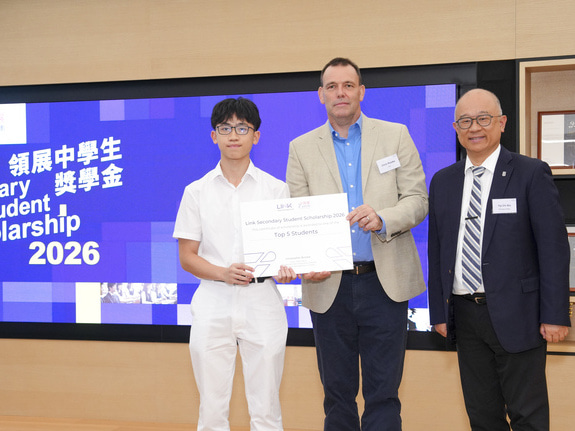
The students found that many people in the young-old age group remain energetic, experienced and eager to give back. Shum Hok-lai of Munsang College suggested turning Lung Hang Shopping Centre into a vibrant community hub, where the young-old could support older seniors by running errands, accompanying them to medical appointments and teaching them digital skills . In doing so, they would continue to contributing to society while reinforcing their own sense of purpose. Lau Cheuk-lam of Buddhist Tai Hung College proposed engaging the young-old as community guides to lead secondary school students on field trips to the Tin Shui Wai Nullah. Through the use of AR, the student could understand the area’s history while this knowledge is passed on to future generations.
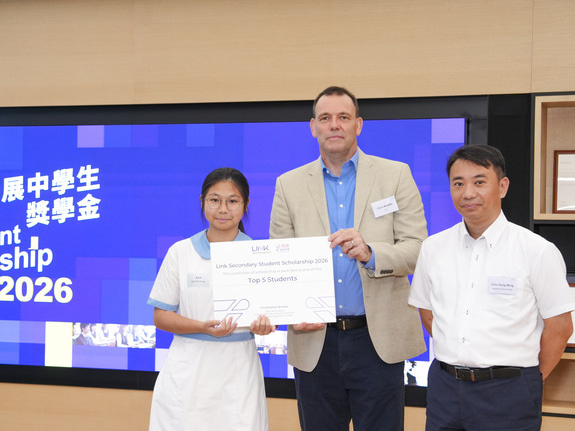
For the teachers, the deeper value of the Link scholarship lies in nurturing students to care for the communities. Chiu Hong-ming, Principal of Buddhist Tai Hung College, attended the awards ceremony. Although his school has produced a top-five awardee for two consecutive years, he places greater emphasis on student development than accolades.. “We nominated Lau Cheuk-lam this year because she has always been deeply involved in community service,” he says. “We hope she takes on a leadership role in the future and inspires more students to serve society.”
Lee Lit-hong, Assistant Vice Principal of St. Paul’s Co-educational College, hopes the scholarship will further motivate Au Pui-sze. “I hope that this experience helps her gain a deeper understanding of the diverse needs within our community and motivates her to continue serving others with dedication and compassion.”
Looking back on the journey, all five students agree that the scholarship sharpened their communication and presentation skills. “The proposal was capped at three pages, so writing it taught me to say more with less,” says Charissa Tsui. Shum Hok-lai believes the workshops strengthened both his presentation skills and confidence. Lau Cheuk-lam, who aspires to become either a kindergarten teacher or social worker – roles that both call for strong communication skills – says the experience was particularly meaningful.
The programme also encouraged the students to think about their future paths. Assigned the theme of “physical wellbeing”, Charissa Tsui discovered an interest in healthcare services and is now considering a future career in health technology. Ng Sum-yin hopes one day to join the government or Link, carrying on her care for the community and her interest in tackling social challenges.
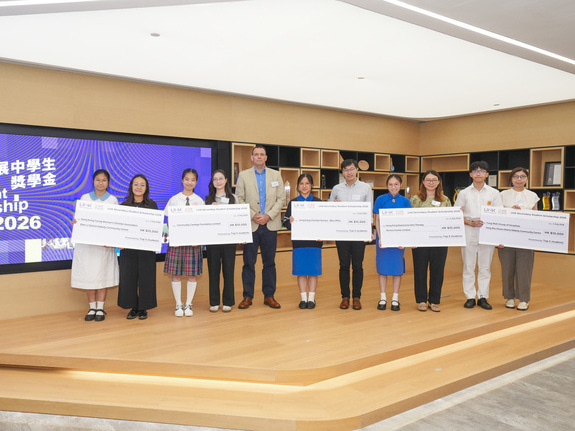
This year’s Link Secondary Student Scholarship programme debuted a “Pay It Forward” initiative. Under the programme, each of the top five awardees selected a non-profit organisation dedicated to active-ageing initiatives, with Link making a donation of $10,000 to each organisation in the student’s honour.
Au Pui-sze of St. Paul’s Co-educational College selected the Hong Kong Expressive Arts Therapy Service Center. “Art lets people release their emotions and gather the inner strength to work through all kinds of psychological challenges,” she says. “It works for many groups, including the seniors.”
Shum Hok-lai of Munsang College chose TWGHs Fong Shu Chuen District Elderly Community Centre because of its wide range of services and its continuing education programmes. “I admire how they put lifelong learning and active ageing into practice, while helping seniors unleash their potentials,” he says. He hopes his donation will benefit more elderly people.
Other donations were directed to Community CareAge Foundation; Hong Kong Christian Service’s Support for Elders with Emigrant Children – Community Helper; and YWCA Ellen Li District Elderly Community Centre.
While the road ahead is still theirs to shape, the students came away from the Link Secondary Student Scholarship programme with lasting friendships, as well as valuable lessons and personal growth. “We come from different schools and backgrounds, yet we got along so well and worked on ideas together,” says Ng Sum-yin, still pleasantly surprised.
Lau Cheuk-lam recalls feeling nervous at the beginning: “Every participant was so impressive that I felt a little intimidated at first. But everyone turned out to be friendly, and I realised that I belonged too.” She adds with a smile, “The greatest reward was making such a wonderful group of friends.”