Share




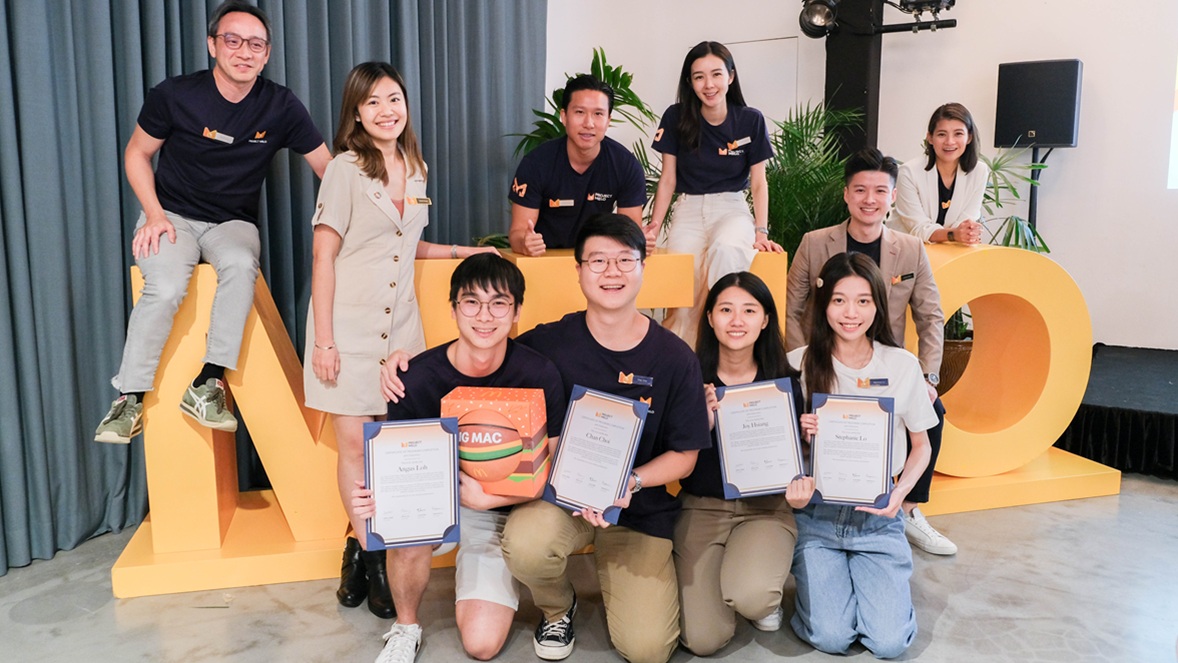
Artificial intelligence (AI) is quickly becoming a part of everyday life. Yet for Maggie Luk, Executive Director of Melo Foundation, the core question isn't just how much technology the younger generation can learn, but how they can use it to make a meaningful difference in their communities.
Supported by Link Together Initiatives, the Melo AI Changemakers Programme is set to engage around 80 secondary school students through design thinking training and hands-on workshops. Participants will pick up practical AI skills and build interactive applications and games tailored to real community needs. Along the way, students will connect directly with local residents, test their ideas, and discover how technology can solve everyday challenges.
Having worked with diverse groups of young people over the years, Maggie has noticed a common pattern: many students are eager to learn, but they lack access to the right opportunities and networks. “Some students are highly motivated but don't know where to begin when it comes to building specialised knowledge. Others are talented but feel unseen and overlooked," she shares.
Beyond tech training, the programme aims to give students a platform to learn, connect and contribute, while helping them develop a deeper understanding of the communities around them.
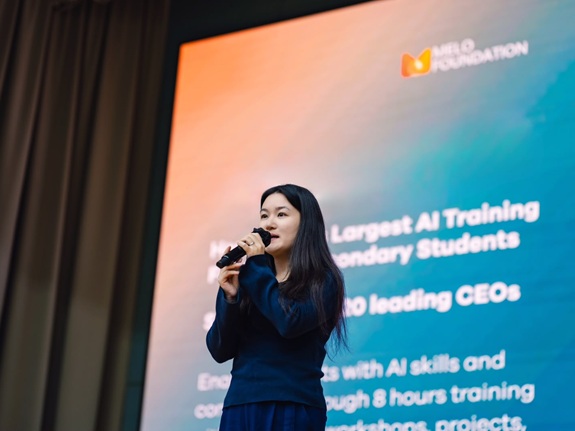
To Maggie, AI is far more than a technical skill, it is a practical tool for solving problems and improving lives.
She fondly recalls a student from a previous AI programme who left a lasting impression on her. Living with a physical condition that required daily stretching exercises, the student initially created an app to help herself stay on track by providing reminders and step-by-step guidance. As the project developed, however, so did her perspective. What began as a personal solution gradually evolved into something with a broader purpose as she realised the same technology could help elderly who face challenges with mobility or managing their health. “At first, she was simply trying to solve a problem for herself,” Maggie recalls. “But over time, she began to see how the same idea could help other people.”
For Maggie, that story perfectly captures what the Melo AI Changemakers Programme strives to inspire. Students are guided to identify genuine community needs, apply design thinking, and build workable AI solutions. The end goal is not simply to understand how technology functions, but to learn how it can create real value for others.
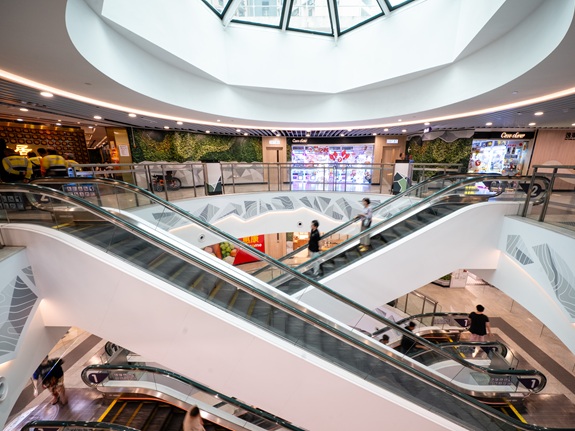
A key element of the programme takes students beyond the classroom and into the communities they hope to serve. Through Community Empathy Tours, participants will visit Link’s malls and neighbourhoods. Before they begin building solutions, they are encouraged to step into the shoes of local residents and observe the communities around them. Maggie believes that many people go about their daily lives in the same neighbourhood without really noticing the people, patterns and needs around them. "Are there more elderly residents or young families around? Which facilities do residents use most? What unmet needs might exist in the community?" she says.
Through these first-hand observations, students can begin to understand the unique characteristics of each community and discover what makes it distinct. Along the way, they will also take part in guided tours and exchange sessions to learn how Link responds to the needs of different communities. Students are then encouraged to contribute their own creativity and ideas to help create better community experiences. For Maggie, the starting point for meaningful innovation is always understanding people. “Good solutions begin with understanding people — creativity alone is not enough,” she emphasises.
Once their training and field visits are complete, the students’ journey comes full circle as they bring their ideas into the community and showcase their projects at Link’s shopping malls. For Maggie, these spaces are the perfect testing ground. Shopping centres are natural gathering places that bring people from all walks of life together, with so much of our everyday lives taking place within them. By presenting their work directly to shoppers, students can see first-hand how people respond and whether their ideas truly address community needs. “It is only when people experience your idea and share their feedback that you can understand whether it genuinely meets a need,” she explains.
Through this process of testing, listening and refining, students learn that innovation is rarely a one-off achievement. Instead, it evolves through ongoing conversations with the people it is designed to serve. Along the way, they learn to adapt to feedback, strengthen their communication skills and build confidence as they share their ideas with everyday shoppers, turning concepts developed in the classroom into solutions shaped by real-world experiences.

Looking ahead, Maggie wants students to leave the programme with more than technical knowledge. As they explore AI and engage with the community, she believes they can gain a clearer sense of their future direction and discover how they can make a meaningful contribution to society. “I hope that through this programme, they can find their place, grow in confidence, and develop the ability to build meaningful connections with their community,” she says.
By combining AI education with hands-on community engagement, the Melo AI Changemakers Programme gives students the opportunity to turn ideas into action, tackle real-world challenges and see first-hand how technology can make a difference. Along the way, they learn not only about code and algorithms, but also the value of empathy and communication, while gaining confidence in their ability to help build stronger, more connected communities.